
Writers Are Not Politicians to Sell Their Consciences
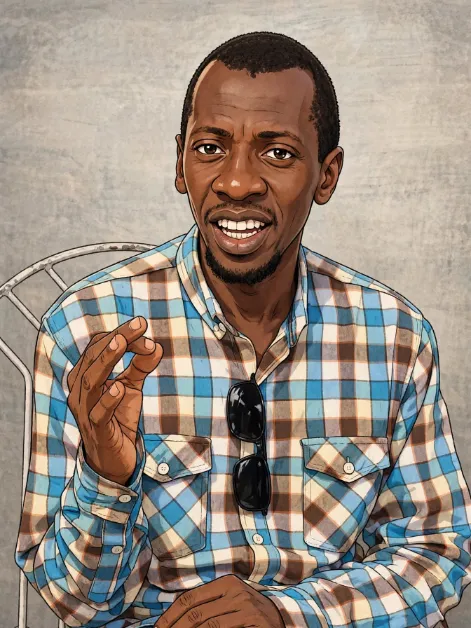
Kakwenza will always paint a forbidding portrait of the Museveni family because he is not a politician, he is a f**kn writer with a conscience.
24 Oct, 2024
Share
Save
Broken societies underestimate the power of writers and always view them as little things that can easily be coerced into submission—and in case the writers cling to their literary powers, defy the abnormalities of authority and paint it as dishonourable as it is, they are victimised and dehumanised to a pulp, but this only stiffens them—for iron sharpens iron.
When Muhoozi Kainerugaba, then his father’s advisor and avenger, and currently the Chief of Defence Forces, ordered his callous boys on April 13, 2020, to abduct Kakwenza Rukirabashaija, an international award-winning novelist of literature of social protest and subject him to torture for allegedly describing both him and his father as vicious fellows on Twitter (X) and in his books, thought they would silence him.
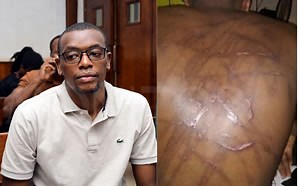
Instead, Kakwenza’s pen and tongue have metamorphosed into fangs—he has written and spoken boldly without succumbing to his usurper's intimidation, and ultimately, he's become insurmountable.
In his first memoir, “Banana Republic: Where Writing is Treasonous”, he describes his illegal detention at the CMI headquarters—and his tale is of survival—crawling on the concrete, picking off his skin and nails with pliers, hanging in the toilet on a rope, eating rotten posho and scanty beans.
Kakwenza would have given up in these times when he smelt putrid blood and when death screamed his name. However, he still thought: if I ever get out there, I will expose these injudicious crooks—and we saw, while he was in exile in Germany, he slapped his oppressors with another book, “The Savage Avenger”, detailing how the Uganda judiciary had collaborated with the bloodthirsty regime to crunch him, altogether with his voice, which is but a voice of the common people.
Since then, Kakwenza has appeared on various international literary and human rights podiums, where he has denounced Museveni’s leadership and depicted Muhoozi as a mentally debilitated general with a stale taste for humanity.
Still, Muhoozi and his father’s enablers continue to tame Kakwenza with money and positions, but he dissents them—he has nothing to do with people who thirst for human flesh and blood, as he describes them in his writings.
On October 23, 2024, when the high court in Kampala, through Justice Boniface Wamala, ruled that indeed the writer’s rights to personal liberty had been violated, and awarded him 50 million shillings in damages, Kakwenza came out and said he didn’t need the money, but justice—whoever had a hand in his torture should be behind bars. He tweets:
I don’t need this money. Cannibal Muhoozi Kainerugaba can collect it and buy more waragi. I want the crooks who hanged me inside CMI in April 2020 arrested and given life imprisonment. If not, I’ll use my hands for revenge. That’s all.
It is a mockery for the government of Uganda to think they can reduce everyone to a pauper—where one has no choice except to dance to their tune—awarding the writer for his torture is uncouth and groundless—for money doesn’t heal the scars of brutality, it doesn’t erase the aftermath of the PTSD.
Whereas the regime attaches a price tag on everyone—activists, political prisoners, opposition politicians, and artists, it is unviable for them to lure Kakwenza with all the resources they have at their disposal—the surveillance, sycophants, brokers, taxpayers’ money, etc., he continues to remind them that he is a writer, whose conscience cannot be bought—he knows his worth—the priceless truth.
Writers, especially those whose stories come from their fleecing hearts—pain and life’s tribulations—will never trade their integrity for any position or amount of money—for they are a mirror through which society is reflected—they stand for the truth, justice, and democracy.
And, though Muhoozi is unbothered because the 50 million is not from his pockets, he and his father should unleash writers from their cage of suppression—let them know that neither money nor threats or torture can kill a writer’s spirit—Kakwenza will always paint a forbidding portrait of them because he is not a politician, he is a f**kn writer with a conscience.
About the author
The author is a published novelist, and book editor at The World Is Watching, Berlin, Germany, columnist and human rights activist. He has written with The Observer Ug, The Ug Post, The Uganda Daily, Muwado, etc.